

To choose the best home renovation contractor in New Jersey, start with the non-negotiables: a current New Jersey Home Improvement Contractor (HIC) registration, at least $500,000 in commercial general liability insurance, workers’ compensation for their crews, and a written contract for any job over $500. Then compare what actually separates good firms from great ones: a portfolio of projects like yours, references you can call, a clear design and budgeting process, one accountable project manager, and a detailed, line-by-line proposal instead of a one-page number.
Search “best renovation contractors in New Jersey” and you will find directories, lead-generation sites and lists that rank companies by who paid to be there. None of them can tell you whether a contractor will return your calls in month four, protect your floors, keep the budget honest or still be in business when you need warranty service. Those are the things that decide whether a renovation goes well.
This guide is the checklist we would give a friend. It covers the legal requirements every New Jersey contractor must meet, the questions that reveal how a company really works, how to compare bids that look nothing alike and the red flags that should end a conversation. We are a design-build firm that has designed and built homes and renovations across Somerset, Morris, Hunterdon and Union counties since 2003, so we have seen what goes right and what goes wrong from the inside.
Why the Contractor Matters More Than the Design
Homeowners tend to spend months on finishes and a few days choosing the company that will install them. It should be closer to the other way around. A beautiful plan built by the wrong team becomes a long list of change orders, delays and repairs. An ordinary plan built by the right team usually turns out better than expected, because good contractors solve problems before they reach your wallet.
The right contractor affects four things you care about:
- Your real budget. The first price is rarely the final price. What matters is how complete the proposal is, how allowances are set and how changes are handled.
- Your schedule. Experienced firms order long-lead items early, coordinate inspections and keep trades in sequence so your home is not a construction site longer than it needs to be.
- The quality you cannot see. Framing, waterproofing, venting, wiring and flashing are hidden behind drywall within weeks. You are trusting the contractor to get them right.
- Your peace of mind. A renovation means people in your home every day. Communication, cleanliness and respect for your family matter as much as craftsmanship.

What New Jersey Requires From Every Renovation Contractor
New Jersey regulates home improvement work through the Contractors’ Registration Act and the state’s home improvement practices rules, both enforced by the Division of Consumer Affairs. These are the minimum standards, not a mark of quality, but any contractor who does not meet them should be removed from your list immediately.
| Requirement | What the law says | How to check it |
|---|---|---|
| HIC registration | Home improvement contractors must register with the NJ Division of Consumer Affairs. Registration numbers start with 13VH and must appear on contracts, ads and commercial vehicles. | Ask for the number and look it up on the Division of Consumer Affairs license verification site. |
| Liability insurance | Registered contractors must carry commercial general liability insurance of at least $500,000 per occurrence. | Ask for a certificate of insurance naming you as certificate holder, and call the insurer to confirm it is active. |
| Workers’ compensation | Required for contractors with employees working on your project. | Request the certificate. Without it, an injury on your property can become your problem. |
| Written contract | Home improvement contracts over $500, and every change to them, must be in writing with specific required terms. | Do not start work on a handshake, an email or a one-page estimate. |
| 3-day right to cancel | You can cancel a home improvement contract for any reason before midnight of the third business day after you receive a copy. | The contract must include this notice in bold type. Refunds are due within 30 days. |
| Licensed trades | Electrical and plumbing work must be performed by state-licensed electrical contractors and master plumbers, with permits. | Ask who holds the licenses and get their numbers. Permits are pulled in the licensed trade’s name. |
| Permits | Most renovations that touch structure, plumbing, electrical, gas or HVAC need permits from your township construction office. | A good contractor pulls the permits. If someone suggests skipping them, walk away. |
Requirements summarized from New Jersey’s Contractors’ Registration Act and Division of Consumer Affairs guidance. Always confirm current rules with the Division or your attorney.
One important exception: building a brand-new house is not considered a home improvement under the Contractors’ Registration Act. New home builders are registered separately with the New Jersey Department of Community Affairs under the state’s new home warranty program. If your project is a custom home rather than a renovation, ask for the builder’s new home registration and warranty details instead of, or in addition to, an HIC number.
Types of Renovation Contractors in New Jersey
“Contractor” covers very different business models. Knowing which one you are talking to helps you compare them fairly.
| Type | How it works | Best for | Watch out for |
|---|---|---|---|
| Handyman or small trade | One or two people doing specific tasks | Repairs, small updates, punch lists | Limited insurance, no design help, may not pull permits |
| General contractor (GC) | Builds from plans you bring, managing subcontractors | Projects where an architect or designer has already finished the drawings | Price is only as complete as your plans; design gaps become change orders |
| Design-build firm | One company handles design, budgeting, permits and construction | Kitchens, additions, whole-home renovations and projects with structural or layout changes | Make sure design and pricing happen together, with real numbers before you commit to construction |
| Architect plus GC | You hire an architect, then bid the plans to several contractors | Complex or historic homes where you want independent design oversight | Two contracts, longer timeline, and bids that often land above the design budget |
| Lead-generation platforms | A website matches you with contractors who pay for leads | Getting quick quotes on simple projects | The platform is not the builder; vet each contractor as carefully as you would without it |
For larger projects, the main decision is usually between design-build and the traditional design-bid-build route. We explain the trade-offs in detail in our article on design-build vs. traditional building. The short version: design-build gives you one team that is accountable for both the drawings and the price, which makes it easier to keep a renovation on budget.
How to Build a Shortlist of Contractors
Most homeowners only need to interview three firms seriously. Here is how to find the right three.
- Define the project firstWrite down what you want to change, why, your timeline and a realistic budget range. A contractor can only give useful advice when they understand the goal.
- Look for projects like yoursA firm that does great bathrooms is not automatically right for a second-story addition. Ask for photos and addresses of similar work, ideally in your area.
- Check reviews across platformsRead Google, Houzz and other reviews, and pay more attention to how the company responds to problems than to the star count.
- Verify registration and insuranceLook up the HIC number and check for complaints with the Division of Consumer Affairs before you invest time in meetings.
- Meet in your homeA walk-through tells you how the contractor listens, what they notice about your house and whether they ask about budget early.
- Call referencesSpeak with at least two clients from the last two years, and one from five or more years ago to learn how the work held up.

15 Questions to Ask Before You Hire a Renovation Contractor
These questions go beyond “are you licensed and insured.” The answers show how the company actually operates.
About the company
- How long have you been in business under this name? Longevity matters for warranty service. Ask about any previous company names.
- What share of your work is projects like mine? You want a firm whose everyday work matches your scope and price range.
- Who will be in my home every day? Find out which tasks are done by employees and which by subcontractors, and how long those subcontractors have worked with the company.
- Who is my single point of contact? One project manager who knows your job is worth more than a large team you cannot reach.
About design and budget
- How do you develop the price? Look for a process that prices the design as it develops, not one number given before anything is drawn.
- What is included in allowances, and are they realistic? Low allowances for cabinets, tile, plumbing fixtures or lighting make a bid look cheaper than it is.
- How do you handle change orders? Every change should be written, priced and approved before the work is done.
- What happens if you find something behind the walls? Older New Jersey homes often hide outdated wiring, rot or undersized framing. Ask how hidden conditions are documented and priced.
About the schedule and site
- What is your realistic timeline, and what usually delays it? Honest contractors will mention permits, long-lead materials and inspections.
- When could you start, and how many projects do you run at once? A firm that can start tomorrow may not be busy for a reason.
- How do you protect the rest of my home? Ask about dust barriers, floor protection, daily cleanup and where workers park and take breaks.
- How will you keep me updated? Weekly meetings, a shared schedule or an online portal are all good signs.
About accountability
- Who pulls the permits, and who attends inspections? The answer should be “we do.”
- What warranty do you provide, and how do I request service? Get it in writing, including what is covered and for how long.
- Can I speak with a client whose project had a problem? Every contractor has a difficult job. The way they handled it tells you more than ten perfect references.
If you are also hiring an architect or interior designer, our guides to the 10 questions to ask before hiring an architect and 10 questions to ask an interior designer cover those conversations.
How to Compare Renovation Bids in New Jersey
Three bids for the same project can be $80,000 apart, and the cheapest is often the most expensive by the end. Before comparing totals, make sure you are comparing the same thing.
| What to compare | Strong proposal | Weak proposal |
|---|---|---|
| Scope of work | Room-by-room description of what is demolished, built and finished | A few lines such as “remodel kitchen per discussion” |
| Allowances | Realistic amounts for cabinets, tile, fixtures and lighting, based on your selections or style | Low placeholder amounts that will rise once you choose materials |
| Exclusions | Clearly listed, such as appliances, landscaping or hazardous material removal | Not mentioned, which usually means you pay for them later |
| Permits and fees | Included, with the contractor responsible for applications and inspections | “By owner” or not mentioned |
| Schedule | Start window, duration and milestones | No dates, or a date with no detail behind it |
| Payment schedule | Payments tied to completed milestones | Large deposit up front or payments tied to dates instead of progress |
| Contingency | A recommended contingency of about 10–15 percent explained up front | No discussion of hidden conditions |
Use this table to line up each proposal before you compare totals.
Ask each contractor to walk you through their proposal line by line. A firm that is confident in its number will happily explain it. If you want a realistic benchmark before you meet anyone, our 2026 cost guides for a kitchen remodel in NJ, a bathroom remodel in NJ and a home addition in NJ show typical ranges by scope.
Red Flags: When to Walk Away
Any one of these is a reason to pause. Two or more is a reason to keep looking.
- No HIC registration number or a number they are reluctant to share. Unregistered contractors are not allowed to sell or perform home improvements in New Jersey.
- Pressure to sign today. Special pricing that expires tonight is a sales tactic, not a discount.
- Large upfront payments. The Division of Consumer Affairs advises caution when a contractor asks for more than a third of the price before work begins.
- Cash only, or payment to an individual. Pay the company, by check or traceable method, and keep records.
- Offers to skip permits. Unpermitted work can complicate insurance claims, inspections and the sale of your home.
- A P.O. box instead of an address. You should know where the business is and be able to visit it.
- A price far below everyone else. It usually means missing scope, low allowances or a plan to make the money back on change orders.
- Vague answers about who does the work. You should know who is in your home and who is supervising them.
What a Good Renovation Contract Includes
New Jersey requires specific terms in home improvement contracts over $500. A professional contract will go further and protect both of you.
- The contractor’s legal name, business address and HIC registration number
- A certificate of general liability insurance attached to the contract
- Start and completion dates, or a clear description of how they are determined
- A detailed description of the work and the materials, including brands or allowances
- The total price, payment schedule and any finance charges
- The written notice of your right to cancel within three business days
- How change orders are requested, priced and approved
- Who obtains permits and schedules inspections
- Warranty terms and how to request service
- How hidden conditions and disputes are handled
Read the whole contract before signing, and ask questions about anything you do not understand. For large projects, many homeowners have an attorney review it.
What a Good Renovation Process Looks Like
The best contractors do not just build well. They follow a process that makes cost and schedule predictable. Here is what that usually looks like on a design-build renovation.
- Idea SessionA conversation about your goals, how you live, your style and a realistic budget range, often in your home.
- Design and preliminary pricingFloor plans and concepts developed together with cost estimates, so the design and the budget grow up together.
- SelectionsCabinetry, tile, fixtures, lighting and finishes chosen before construction, with your designer guiding the decisions.
- Final proposal and contractA detailed, fixed scope with clear allowances, schedule and payment milestones.
- Permits and orderingPermit applications go in while long-lead materials are ordered, so construction does not stall waiting for deliveries.
- ConstructionA dedicated project manager, regular updates and inspections at each required stage.
- Walk-through and warrantyA final walk-through, punch list, documentation and a clear path for warranty service.
This is the process we follow on every project. You can read more about how it builds trust in our two-part series on our proven process.
Our Renovation Work in New Jersey
Photos and stories from finished projects are the best way to judge a contractor. Here are two of ours.
A 1950s ranch turned into a modern mountain contemporary home
This whole-home transformation earned Distinctive Domain the 2025 Custom Home Remodel Transformation Award from Certified Luxury Builders. The project combined a new open floor plan, a new kitchen and a completely new exterior, all managed by one design-build team.
- Full redesign of the floor plan
- New kitchen at the center of the home
- Updated systems and finishes throughout
- Award-winning exterior transformation
An addition and whole-home renovation in Short Hills
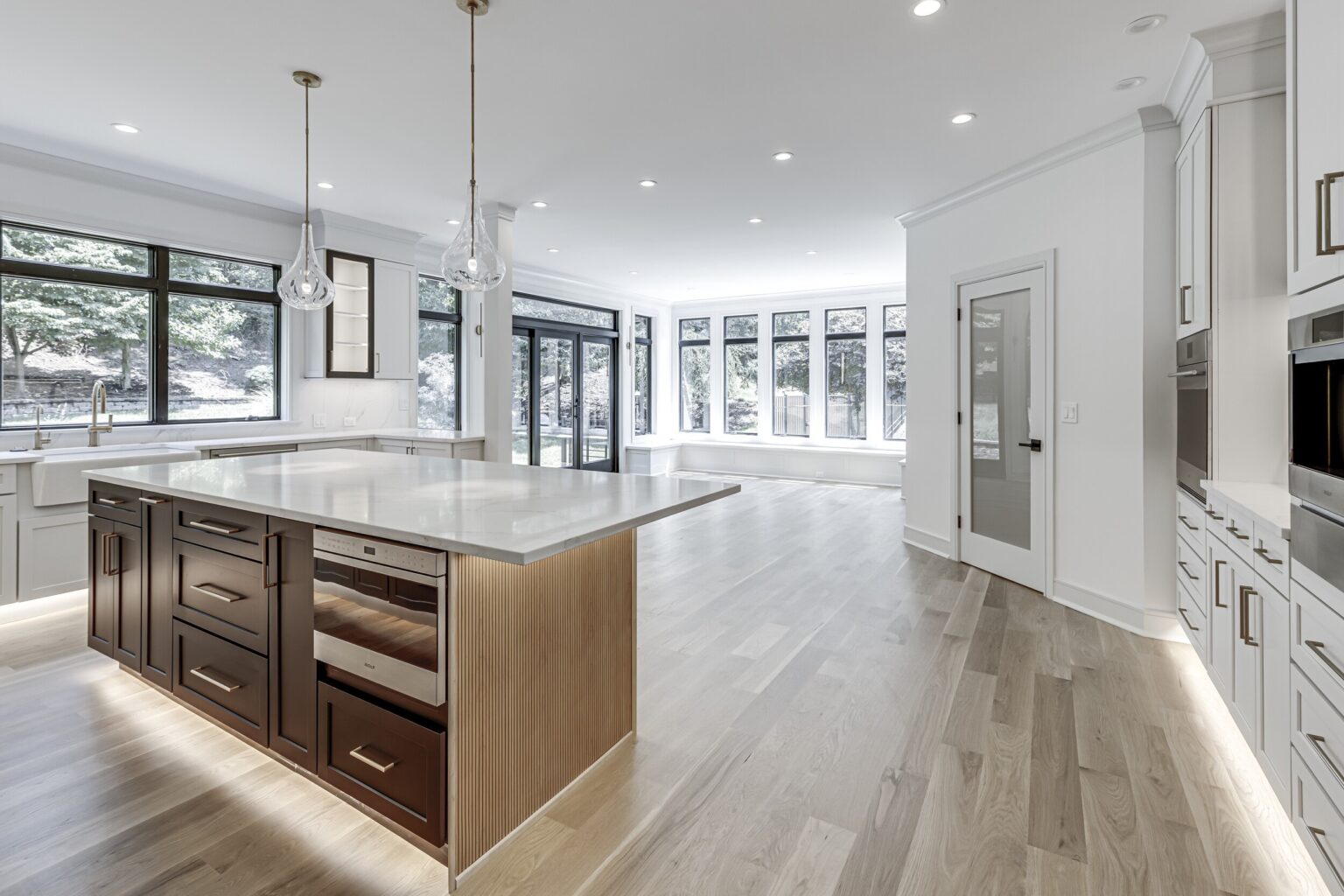
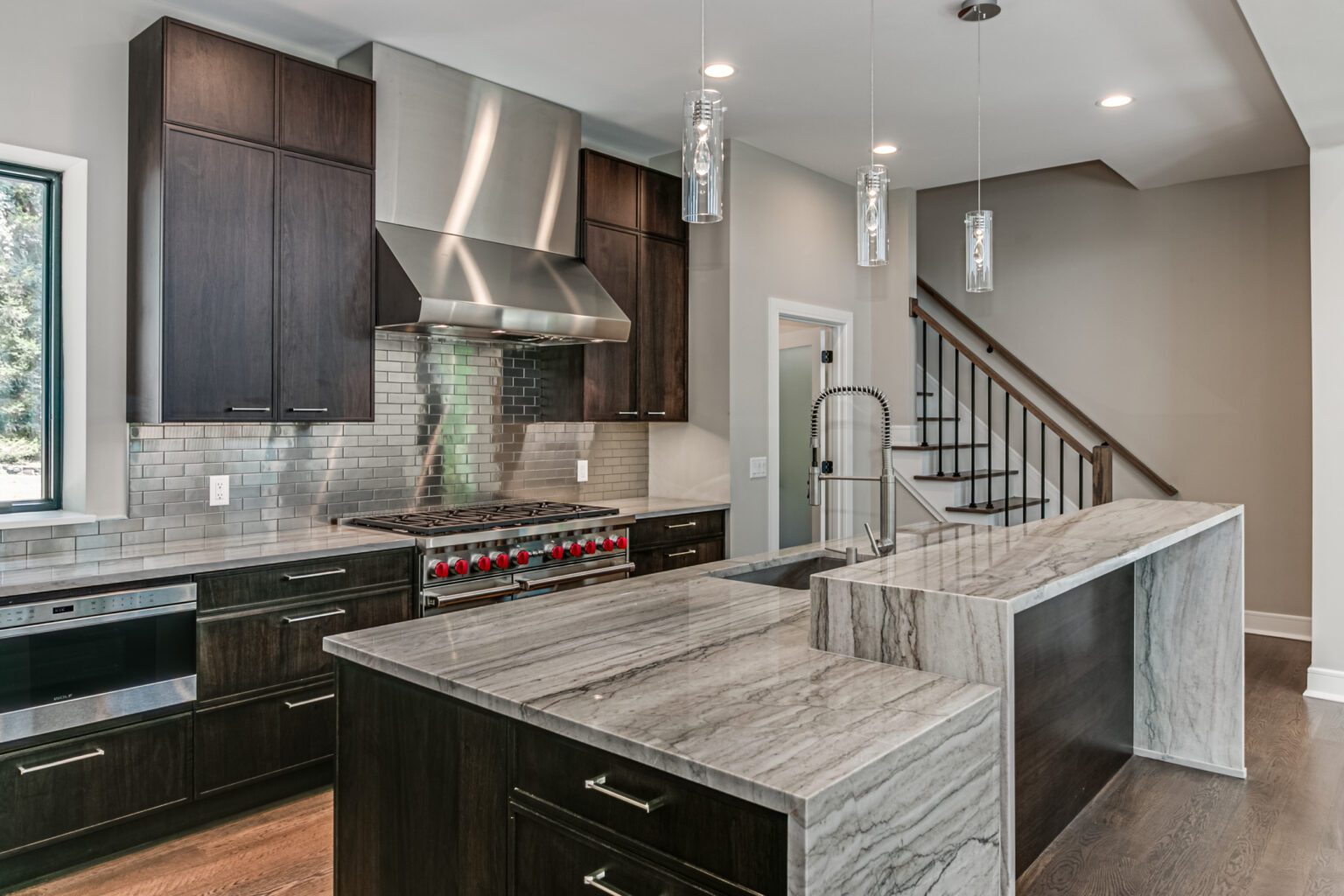
At this 5,906-square-foot home, we designed and built an addition together with a renovation of the existing house, including a new chef’s kitchen. Planning both at once let the new and existing spaces work as one home.
- New addition and renovated interiors
- Chef’s kitchen with professional cooking wall
- Skylights and walls of windows
- One team from design through construction
Renovation Contractor FAQs
How do I find the best renovation contractor in NJ?
Start with contractors who have completed projects like yours in your area. Verify their New Jersey HIC registration and insurance, read reviews on several platforms, meet at least three firms in your home, call recent and older references, and compare detailed written proposals rather than totals.
Do renovation contractors need a license in New Jersey?
Home improvement contractors must register with the New Jersey Division of Consumer Affairs and carry at least $500,000 in commercial general liability insurance. Electrical and plumbing work must be done by state-licensed electricians and master plumbers. Builders of new homes register separately with the Department of Community Affairs.
How can I check if a contractor is registered in NJ?
Ask for the contractor’s HIC registration number, which begins with 13VH, and look it up on the New Jersey Division of Consumer Affairs license verification website. You can also ask the Division whether complaints have been filed.
How many quotes should I get for a renovation?
Three detailed proposals is usually enough. More than that tends to add confusion rather than clarity, especially if the proposals are not based on the same scope and selections.
How much should I pay a contractor up front in NJ?
Payments should follow completed milestones. The New Jersey Division of Consumer Affairs advises caution if a contractor asks for more than a third of the total before work begins. Never pay in cash.
Can I cancel a home improvement contract in New Jersey?
Yes. You can cancel for any reason before midnight of the third business day after you receive a copy of the contract. Notice must be in writing, and any money paid must be refunded within 30 days.
Is a design-build firm better than a general contractor?
For kitchens, additions and whole-home renovations, design-build often makes budgeting easier because one team is responsible for both the design and the price. A general contractor works well when an architect has already completed detailed plans.
What are the warning signs of a bad contractor?
Common warning signs include no registration number, pressure to sign quickly, large upfront payments, cash-only requests, offers to skip permits, a P.O. box instead of a business address and a price far below every other bid.
Talk to a Renovation Team You Can Verify
Bring your plans, your questions and this checklist. In a free Idea Session, our design-build team will walk through your goals, what your home allows and a realistic budget range, and answer every question on this page.
Schedule Your Free Idea SessionOr call us at 732-469-3227
Explore our home remodeling services in New Jersey, including kitchen remodeling, bathroom remodeling and home additions, read reviews from our clients or learn more about Distinctive Domain. We work throughout Somerset County, Morris County, Hunterdon County and Union County; see all of our remodeling service areas.
This guide is general information for New Jersey homeowners, not legal advice. Contractor registration, insurance and contract requirements can change; confirm current rules with the New Jersey Division of Consumer Affairs or your attorney.